Tree Removal Metairie: How Experts Remove Trees in Sections

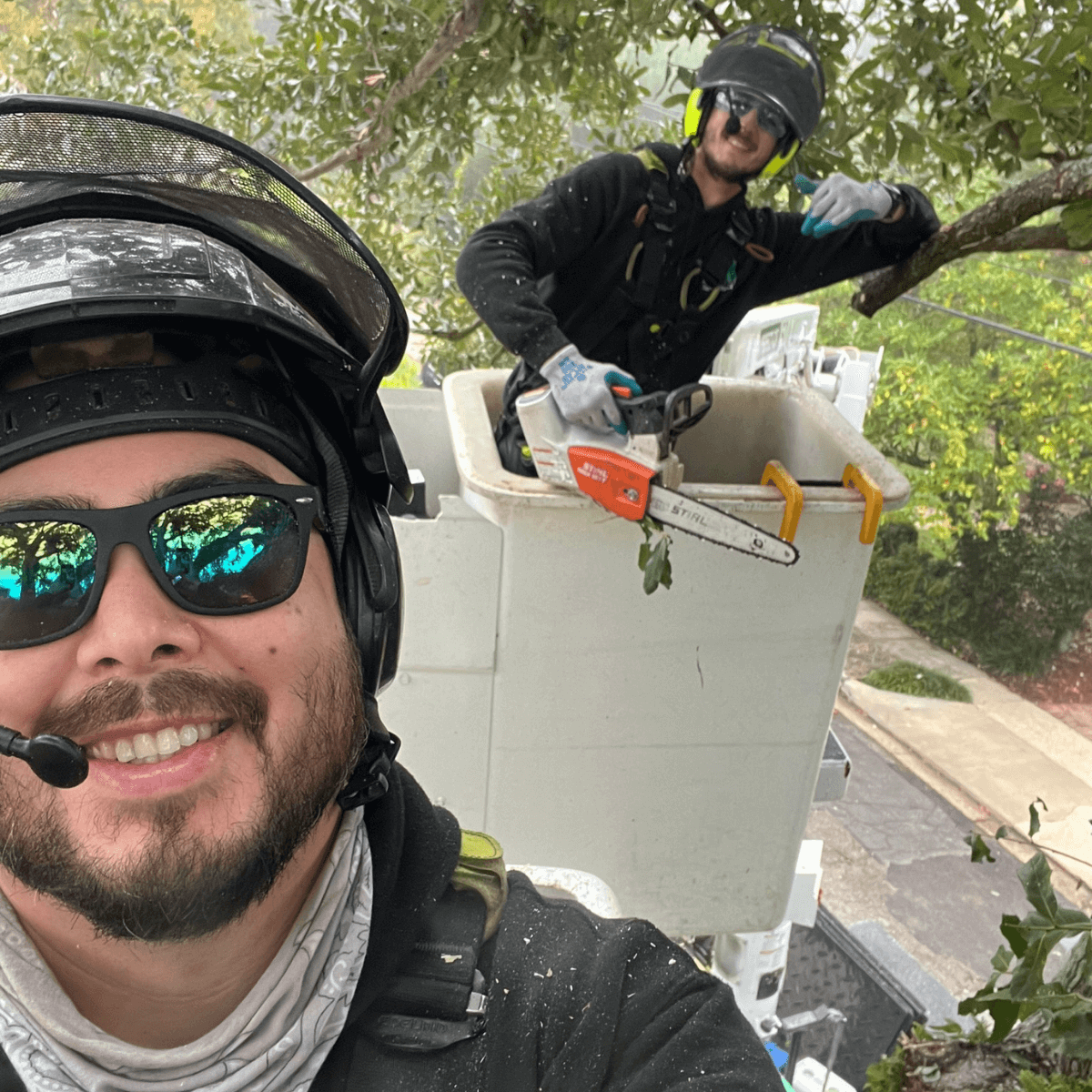
Drive through Metairie after a heavy storm and you will see the same pattern again and again, mature live oaks leaning over driveways, water oaks split at the trunk, and tall pines hung up in neighboring canopies with nowhere safe to fall. Even on calm days, tree work here is rarely simple. Yards are tight. Utility lines are close. Fences, roofs, sheds, and parked cars crowd the drop zone. That is why so much professional tree removal in this area happens in sections rather than in one dramatic cut from the base.
Sectional removal is exactly what it sounds like. Instead of dropping the whole tree at once, a trained crew dismantles it piece by piece, starting from the crown and working downward in controlled stages. To someone watching from the street, it can look almost surgical. One climber or bucket operator cuts limbs in a precise order. Ground crew members control each piece with ropes, lower it into a narrow space, then move it out before the next cut. When done well, it is quiet in its own way, measured, deliberate, and far more technical than most homeowners realize.
For anyone researching tree removal Metairie services, it helps to understand why sectional removal is so common here, how crews decide on a plan, and what separates careful professional work from reckless cutting. The details matter, because the difference between a clean removal and a broken roof often comes down to judgment, sequencing, and restraint.
Why whole-tree felling usually does not work in Metairie
In open rural areas, a tree can sometimes be felled from the ground if there is enough room for the full length of the trunk and crown to land safely. Metairie is not built like that. Most residential lots leave very little clear space around large trees. Even when a tree appears to have a side yard or rear corner available, the crown may spread over structures, neighboring property, or service lines. A straight drop often is not an option.
Local conditions add another layer. South Louisiana soils can stay wet for long periods, and repeated saturation weakens root stability. After extended rain or a tropical system, a tree may already be compromised before a saw ever touches it. That changes how forces move through the trunk and limbs during cutting. A tree that looks sturdy from the driveway can behave unpredictably once weight starts coming off one side.
Species matters too. Live oaks, common across Metairie, can carry immense lateral weight over homes and streets. Water oaks often decline faster than homeowners expect and may hide internal decay until a limb fails. Pine can be tall and top heavy, especially when wind damaged. Crews do not just remove “a tree.” They remove a species, in a specific condition, on a specific site, under specific constraints.
That is the real reason sectional work is standard. It reduces unknowns. Instead of asking the entire tree to go where you want all at once, you control one manageable piece at a time.
The first thing experts do is read the tree and the site
Before ropes go up or the first cut is made, experienced crews spend time assessing the tree. This part is often invisible to the client, but it drives every decision that follows.
They look at lean, crown balance, cracks, deadwood, cavities, root flare, fungal activity, soil saturation, and how the tree has reacted to past pruning. They also study what is underneath and around it. Is there a fence line that cannot be damaged? A fragile brick walkway? A detached garage roof with no margin for error? Is the backyard access wide enough for equipment, or will every log have to be walked or carted out by hand?
The utility picture matters as much as the tree. There is a major difference between a nearby service drop to a home and primary distribution lines in the street. Qualified tree crews know when they can work near certain lines with proper clearances and when the utility must be involved first. No reputable company improvises around energized conductors.
A solid estimate usually reflects this site reading. If one bid is dramatically lower than the others, it often means something has been left out, either the labor needed for rigging, the extra care required around property, or the true disposal time. Cheap tree work has a way of getting expensive after the fact.
What “removing a tree in sections” actually looks like
The process begins with access and setup. The crew establishes a work zone, positions equipment, protects surfaces if needed, and plans debris flow. On a narrow suburban lot, that can be half the battle. If the chipper can only be parked in the driveway but the tree is behind the house, every branch must move through a defined corridor. Good crews think through that logistics chain before climbing starts.
From there, the removal usually follows the tree from the outside in and from the top down. Smaller outer limbs may come off first to reduce sail area and lighten the crown. Then larger limbs are either free dropped into a clear spot or rigged and lowered by rope. When room is limited, pieces are cut with a lowering line attached so the ground crew can guide, brake, and land them softly.
The trunk comes later, often in short blocks. If there is space beneath, those blocks might be dropped onto a protected landing zone. If not, they may be rigged as well. The final stump is handled separately, depending on whether the homeowner wants it cut flush, ground out, or left at a certain height for future access or landscaping.
This sounds straightforward on paper, but every stage depends on constant adjustment. Once a large lateral limb is removed, the tree’s balance changes. Rope angles change. Wind changes. A hidden pocket of decay may show up in a cut face. The crew has to keep reading the situation in real time.
Climbing, bucket trucks, cranes, and why method matters
People sometimes assume there is one standard way to remove a tree. In practice, the chosen method tells you a lot about the job.
Climbing remains the most flexible option for many backyards in Metairie, especially where access is limited. A skilled climber can move through the canopy, tie in from stable anchor points, and dismantle the tree with minimal lawn disturbance. It is labor intensive and demands strong judgment, especially in compromised trees.
Bucket trucks work well when the site allows vehicle access and the tree can be reached safely from the road or driveway. They can speed up removals and reduce exposure for the worker aloft. But plenty of lots simply do not allow a bucket close enough, and outriggers need stable placement.
Cranes come into play when the tree is too hazardous to dismantle conventionally, or when heavy limbs extend over structures with no safe drop zone. A crane can lift large sections vertically before they are cut free, reducing shock load and keeping pieces away from roofs and fences. It is an effective solution, but not always a cheap one. It also requires enough room for setup and a crew that knows how to coordinate picks safely.
None of these methods tree removal metairie is inherently “best.” The best method is the one that fits the tree, the site, and the level of risk. Experienced estimators explain that clearly. If someone talks as if every tree can be handled the same way, that is a warning sign.
Rigging is where real skill shows
Many homeowners judge tree work by the saw. Professionals often judge it by the ropes.
Rigging is the art and science of controlling moving wood. It involves selecting anchor points, hardware, rope type, friction management, cut size, and landing direction so each piece behaves predictably. When a branch weighs a few hundred pounds and hangs over a sunroom, there is no room for guesswork.
A simple example helps. Imagine a large horizontal oak limb extending over a driveway and part of the house. If a climber just cuts it free, gravity decides everything. If the limb is properly tied, balanced, and cut in relation to the hinge wood, the ground crew can lower it on command and swing it into the only safe space available. That control protects property and reduces stress on the remaining tree structure as dismantling continues.
Rigging also protects workers. Sudden shock loads can fail ropes, hardware, or anchor points if the system is tree removal metairie poorly designed. That is why professionals spend time on cut size and sequencing. Sometimes the safest move is to take more smaller pieces, even if it slows the job. Fast is not the same as efficient. Efficient means no surprises.
Weather changes the plan more than homeowners expect
In Metairie, weather is never a footnote. Heat affects crew fatigue and hydration. Afternoon storms can turn a manageable job into a stop-work situation. Wind matters even when it seems mild at ground level because movement is stronger higher in the canopy. Wet bark can affect footing and climbing pace. Saturated ground can limit equipment access and increase the chance of rutting or instability.
After storms, urgency creates another problem. Everyone wants hazardous trees addressed immediately, which is understandable, but some post-storm trees are too unstable for normal climbing. A root plate may have shifted without fully failing. Cracked tops may be resting on neighboring branches under tension. What looks like a simple “finish the fall” job can be one of the most dangerous removals a crew sees all year.
That is one reason qualified companies may say no to same-day work on certain trees until proper equipment is available. It is not hesitation. It is discipline.
The homeowner sees a tree, the crew sees load paths
One of the biggest gaps between public perception and professional practice is how each side sees the tree. Most people see trunk, limbs, and leaves. Skilled removers see compression, tension, leverage, and stored energy.
Take a partially split limb still attached to the tree. To a homeowner, it may look like it is just hanging there. To a climber, it may be loaded like a spring. A cut in the wrong place can release that energy violently, twisting the piece or tearing bark down the trunk. The same principle applies to storm-bent stems, intertwined crowns, and trunks with internal rot. The outside shape does not tell the whole story.
This is why sectioning down a tree is not merely “being careful.” It is active load management. Each cut changes what the next cut will do. Good crews think two or three cuts ahead.
What affects the cost of tree removal in sections
Homeowners often ask why one tree removal quote is twice another. The answer is usually not the wood itself. It is the complexity.
Several factors drive price:
- Tree size, species, and condition.
- Proximity to homes, fences, pools, and power lines.
- Access for climbers, bucket trucks, loaders, or cranes.
- Amount of rigging required and how small the pieces must be cut.
- Cleanup scope, hauling distance, stump grinding, and disposal volume.
A 50-foot tree in an open front yard can be faster and less expensive than a 30-foot tree trapped between a house, garage, and power line. Sectional removal gets labor heavy quickly. Every additional constraint means smaller cuts, more rigging, more communication, and more time on site.
If you are comparing estimates, ask what is included. Some bids cover full haul off and site rake. Others leave wood rounds stacked or exclude stump grinding. Some include permit help if needed, while others do not. A low number is not always a complete number.
The difference between pruning and removal can vanish late in a tree’s life
A lot of removals begin as pruning conversations. A homeowner notices dead limbs after a storm or worries about branches touching the roof. An arborist comes out expecting to recommend reduction or thinning, then finds a hollow trunk, a major union crack, root decline, or extensive fungal decay. At that point, pruning no longer solves the real problem.
This happens often with mature shade trees that have been stressed for years by compacted soil, repeated storm exposure, or improper topping in the past. From the street, they may still leaf out enough to look alive. Inside, they can be structurally unsound.
One case that sticks with many tree crews involves the “healthy” backyard oak that fails the moment weight starts coming off the crown. The first few cuts reveal dark, soft interior wood where the trunk should be solid. Suddenly the climb is no longer routine. The removal plan changes, sometimes toward a crane, sometimes toward more conservative tie-in choices and smaller pieces. Homeowners are often surprised because they saw leaves and assumed health. Structure and vigor are not the same thing.
Why cleanup is part of the job, not an afterthought
The removal itself gets the attention, but cleanup tells you a lot about professionalism. A disciplined crew does not just cut efficiently. They keep the site moving so debris does not create trip hazards, block emergency access, or damage turf by being dragged repeatedly over the same path.
Chippers, loaders, skid steers, and log dollies can speed cleanup, but not every yard can take equipment without collateral damage. Sometimes hand carrying is slower but wiser. On soft ground, aggressive machine use can leave ruts that outlast the memory of the tree. On narrow side yards, a few sheets of plywood can save irrigation lines and reduce surface damage. Those small decisions matter.
Good cleanup also includes what gets communicated. If heavy trunk sections must be rolled across a lawn, the homeowner should know beforehand. If a crane will need street space or mats on the driveway, that should not be a surprise the morning of the job.
Questions worth asking before hiring a tree removal company
The right questions usually reveal more than the polished sales pitch. You do not need to interrogate a contractor, but you should understand how they think about risk, logistics, and accountability.
Ask how they plan to access the tree and whether they expect to climb, use a bucket, or bring in a crane. Ask what is near the tree that concerns them most. Ask whether wood and brush removal are included, and what will happen to the stump. Ask how they handle utility proximity and whether they carry appropriate insurance. Listen for specifics. People who do this work every day tend to answer in concrete terms, not general promises.
It is also worth asking what could change the plan on job day. A thoughtful answer might include wind, hidden decay, saturated soil, or equipment access issues. That kind of honesty usually signals experience, not uncertainty.
Why sectional removal is often the safest and least damaging choice
There is a tendency to think that cutting a tree into many pieces must be more disruptive than dropping it whole. On confined properties, the opposite is usually true. Controlled dismantling protects roofs, fences, gardens, neighboring yards, and the workers doing the removal. It allows the crew to adapt as the true condition of the tree reveals itself. It limits the amount of force released at any one moment.
For Metairie properties, where homes are close and storm damage is part of life, that level of control is usually not optional. It is the professional standard. The work may look slower from the curb, but what you are seeing is caution applied with purpose. Each rope set, each measured cut, each lowered limb is part of a larger strategy to bring the tree down without creating a second disaster on the ground.
That is the core of expert tree removal Metairie service. Not brute force, not theatrics, and not speed for its own sake. Just sound assessment, precise cutting, and careful control from the first branch to the final log. When the job is done right, the tree is gone, the property is intact, and the only real sign of the work is a cleaner, safer space where a problem used to stand.
A Perfect Cut Tree Service
4725 Shores Dr, Metairie, LA 70006
+1 504-732-0779
FAQ About tree removal metairie
What is the average cost of tree removal in my area?
There is no single price that fits every tree. Size, condition, access, nearby structures, equipment, debris hauling and stump work affect the estimate. Request a written, site-specific quote that identifies what is included.
Who will remove trees for free?
Free removal is not generally available for ordinary private-property tree work. Utilities or public agencies may handle trees within their responsibilities. Confirm eligibility directly and do not assume that an offer or assistance program covers your tree.
Can I just cut down a tree in my yard?
Check ownership, location and local requirements first. Jefferson Parish requires a permit for removal of qualifying vegetation in the public right-of-way, and additional protections may apply in designated areas. Ask the parish about your property and have a qualified tree professional assess the work.
Corrections
Spot something wrong? Send it to the desk and it gets fixed in the open.